15 Best Dropshipping Products to Sell in 2027 for Beginners
Oct 18, 2026

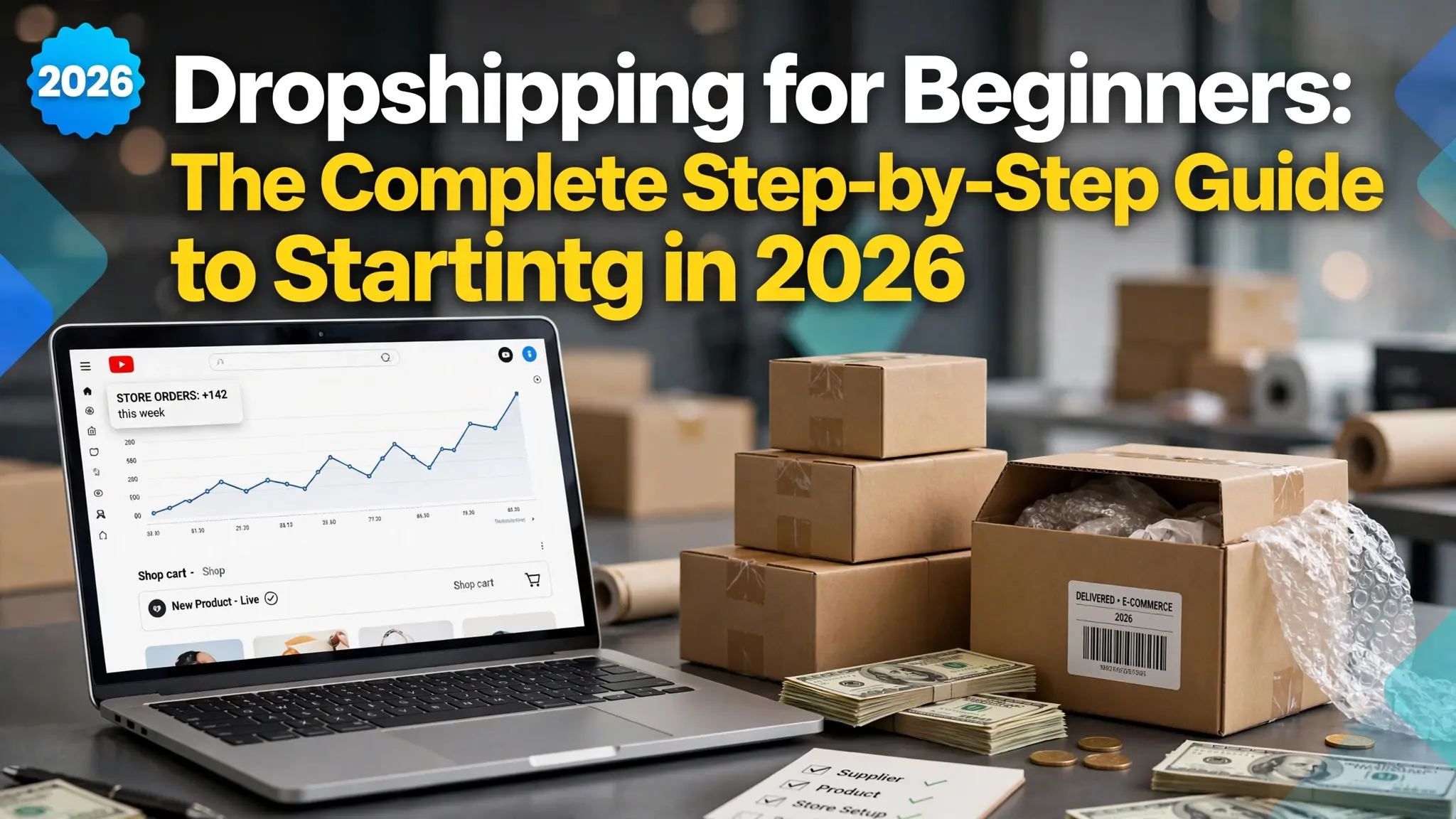
Starting an online business can feel complicated when you have a limited budget, no warehouse, and little experience selling products. Dropshipping offers an alternative to traditional retail by allowing you to sell products online without keeping your own inventory.
However, dropshipping is not a guaranteed way to make money. It requires product research, reliable suppliers, effective marketing, customer service, and careful financial planning. Understanding how the business model works before investing your money can help you avoid common beginner mistakes.
This complete dropshipping guide for 2026 explains how to choose a niche, research products, find suppliers, create an online store, attract customers, and manage orders. Whether you want to start a side business or build a long-term ecommerce brand, these steps will help you understand the process.
Dropshipping is an ecommerce business model in which a store sells products without purchasing and storing inventory in advance.
When a customer places an order, the store owner forwards the order details to a supplier. The supplier prepares and ships the product directly to the customer, depending on the arrangement.
The store owner is generally responsible for the customer-facing business, including product selection, pricing, marketing, order communication, and customer support.
The process usually follows five steps:
For example, imagine selling a product for $30. Your supplier charges $12, and shipping costs $4. Before other expenses, you have $14 remaining.
That $14 is not necessarily your net profit. Payment processing, advertising, platform fees, refunds, taxes, and other operating costs may reduce it.
A niche is a specific category of products or customers your store focuses on. Selecting a niche helps you develop a clear brand identity and understand what your target audience needs.
Popular categories to research include:
These are research starting points, not guaranteed profitable niches. Demand, competition, shipping costs, and customer preferences vary across markets.
Before selecting a niche, ask yourself:
Avoid choosing a niche only because it is trending on social media. A trend can disappear before your business becomes established.
Product research helps you identify items that solve a problem, offer convenience, or appeal to a clearly defined audience.
Instead of selecting products randomly, compare several candidates using the same criteria.
Google Trends: Explore whether interest in a product or category is increasing, decreasing, or seasonal. Remember that search interest does not directly measure sales.
Online marketplaces: Study customer reviews, frequently mentioned problems, product features, and common complaints.
Social media: Look for recurring product demonstrations and genuine discussions. Viral views alone do not prove purchasing demand.
Competitor stores: Examine pricing, product positioning, shipping promises, and customer policies. Use this research to identify opportunities rather than copying competitors' content.
Customer feedback: Reviews can reveal improvements customers want, such as stronger materials, simpler installation, or better packaging.
A promising candidate often has several characteristics:
Beginners should be especially careful with products involving safety risks, counterfeit branding, restricted ingredients, complicated electrical requirements, or medical claims.
Your supplier directly affects product quality, delivery speed, and customer satisfaction. A low wholesale price is not useful if products arrive damaged or orders are repeatedly delayed.
Potential supplier sources include wholesale distributors, manufacturers, local suppliers, and established dropshipping platforms.
Examples of services and directories worth researching include AliExpress, CJdropshipping, and Spocket. Their available suppliers, product ranges, fees, delivery options, and country coverage differ, so compare current terms before signing up.
Check the following details before accepting orders:
Product quality: Request a sample when practical. Check materials, dimensions, packaging, and whether the product matches its listing.
Shipping: Confirm delivery estimates for your target market, tracking availability, shipping costs, and handling times.
Inventory: Ask how stock levels are updated and what happens when a product becomes unavailable.
Returns and refunds: Understand who pays for return shipping and how damaged, missing, or incorrect orders are handled.
Communication: Test how quickly the supplier answers questions and resolves issues.
Legal compliance: Confirm that products can legally be sold in your target market and that any required certifications or labelling are available.
Do not rely entirely on supplier photographs or unverified claims. Testing a sample can reveal problems before customers experience them.
You need a place where customers can discover products, understand your offers, and place orders.
Shopify is a hosted ecommerce platform with store-building and sales-management features. It may suit sellers who prefer an integrated system, although subscription charges and additional app costs should be considered.
WooCommerce is an ecommerce solution built for WordPress. It provides considerable flexibility, but hosting, maintenance, security, extensions, and technical setup may require additional work.
Depending on your country, products, and eligibility, marketplaces or social commerce platforms may provide alternative routes to customers. Review their selling rules, fees, fulfilment requirements, and restrictions before choosing one.
Your store should include:
Your store must clearly communicate who is selling the product and how customers can get help after purchasing.
Pricing is one of the most important parts of a dropshipping business. Your selling price must cover product costs, shipping, transaction fees, marketing, and other expenses.
Consider this illustrative example:
| Expense | Amount |
|---|---|
| Selling price | $30 |
| Supplier product cost | $12 |
| Shipping | $4 |
| Payment and transaction fees | $1.50 |
| Advertising cost per order | $6 |
| Amount remaining before other expenses | $6.50 |
In this example, $6.50 remains before software subscriptions, refunds, taxes, customer support, and other overhead. Actual costs can be very different.
Profit margin is calculated by dividing profit by revenue and multiplying by 100.
For example, if a business earns $6.50 before overhead on a $30 sale, that amount represents approximately 21.7% of revenue at that stage.
This is not necessarily the final net profit margin. Keep a record of all expenses and calculate your results using actual sales data.
Payment options depend on your business location, the countries you sell to, and the providers available to you.
Before launching, confirm that your chosen payment provider supports your business and target market. Review transaction charges, payout schedules, dispute procedures, currency conversion, and identity verification requirements.
If you sell in Pakistan, research payment methods that are actually available to your registered business. Do not assume that every international payment processor supports Pakistani merchants.
You should also test your checkout, order confirmation emails, inventory updates, and supplier handoff before accepting real orders.
An online store needs visitors who are interested in its products. Marketing helps you reach potential customers and explain why your offer is relevant to them.
SEO can help your product and category pages appear in relevant search results over time.
Focus on:
Avoid copying supplier descriptions across every product. Original content can better explain product benefits, limitations, sizing, and use cases.
Choose social platforms that match your audience and product type. Demonstrate products honestly, answer questions, and publish useful content rather than posting only sales messages.
For example, a home organization store might share storage demonstrations, while a pet accessories store could publish practical guides on selecting suitable products.
Paid advertising can generate traffic, but it can also consume your budget quickly. Start with a defined testing budget, track conversions, and compare customer acquisition costs with your actual contribution per order.
Do not scale a campaign simply because it receives clicks or likes. Evaluate whether it generates profitable sales after accounting for costs.
With appropriate consent, email can help you send order updates, useful product information, and relevant offers. Provide a clear way for subscribers to unsubscribe and comply with applicable privacy and marketing laws.
Even when a supplier ships the product, customers generally expect the store they purchased from to help resolve problems.
Prepare a process for handling:
Publish realistic shipping estimates and notify customers when delays occur. Avoid promising delivery dates that your supplier cannot reliably meet.
A clear refund policy and responsive support can help build trust, although they cannot eliminate every dispute.
Once orders begin arriving, use data to determine which products and marketing activities deserve more attention.
Important metrics include:
Conversion rate: The percentage of store visitors who complete a purchase.
Average order value: The average revenue generated per order.
Customer acquisition cost: The marketing cost required to acquire a customer.
Refund rate: The proportion of orders that are refunded.
Contribution per order: The revenue remaining after variable costs associated with the sale.
Review these metrics regularly. If a product generates frequent complaints, low margins, or expensive returns, improve the offer or consider replacing it.
Dropshipping lowers the need to purchase inventory upfront, but it does not eliminate business risk.
Common challenges include intense competition, supplier stock changes, long shipping times, low margins, advertising expenses, product quality problems, and refunds.
You may also have legal responsibilities relating to consumer protection, product safety, taxes, privacy, and intellectual property. These obligations depend on where your business operates and where you sell.
Start with a manageable product range and expand when your supply chain, customer service, and finances are working reliably.
A product may look attractive but still have weak demand or poor margins. Evaluate customer needs and costs before listing it.
Large advertising budgets do not guarantee sales. Test carefully and stop campaigns that consistently lose money.
Unexpectedly long delivery periods can lead to cancellations, refund requests, and negative reviews.
Copied descriptions, images, and branding can create intellectual property problems and make your store look untrustworthy. Develop original content and use materials you have permission to publish.
Sales revenue is not the same as earnings. Include every relevant cost when deciding whether your business is sustainable.
It may be worth exploring if you have a clear customer niche, reliable suppliers, and a realistic plan for pricing and marketing. Results depend on execution, competition, demand, and costs.
Yes. In the traditional dropshipping model, the supplier stores and ships inventory. You still need to manage your store, customer communication, payments, and business obligations.
There is no universal starting amount. Expenses may include a domain, ecommerce platform, samples, marketing, payment fees, and business registration. Your requirements depend on the platform, country, and sales strategy.
A dedicated website is one option, but eligible marketplaces and social commerce channels may also allow you to sell products. Each has its own rules, costs, and limitations.
They aim to sell products for more than the combined cost of purchasing, shipping, processing, marketing, and fulfilling each order, while also covering overhead and other liabilities.
No. Supplier coordination, product research, marketing, customer support, refunds, and financial management require ongoing work.
Potentially, yes. You must research suppliers, payment providers, platform eligibility, shipping arrangements, tax obligations, and the rules of your target markets before launching.
Products that solve clear problems, are straightforward to demonstrate, and have manageable shipping and return costs are useful starting points for research. No product category guarantees success.
Dropshipping provides a way to operate an online retail business without maintaining your own inventory, but building a sustainable store requires planning and consistent effort.
Start by selecting a focused niche, researching potential products, checking suppliers, calculating realistic margins, and choosing an appropriate ecommerce platform. Then create helpful product pages, market your store responsibly, and track actual business performance.
The most useful goal for a beginner is not to launch hundreds of products immediately. It is to build a reliable process, learn from real customer feedback, control costs, and improve the store step by step.

Discover 15 dropshipping product ideas for 2027, from home organizers and pet accessories to travel essentials...
Learn how to start dropshipping with no money or a very small budget. Explore free product research tools, sup...